.webp)
Ranked #1 in Europe and #2 globally at the world's only live GTM engineering championship. Competing against 32 cities. Building complete GTM systems in 20 minutes, on stage.
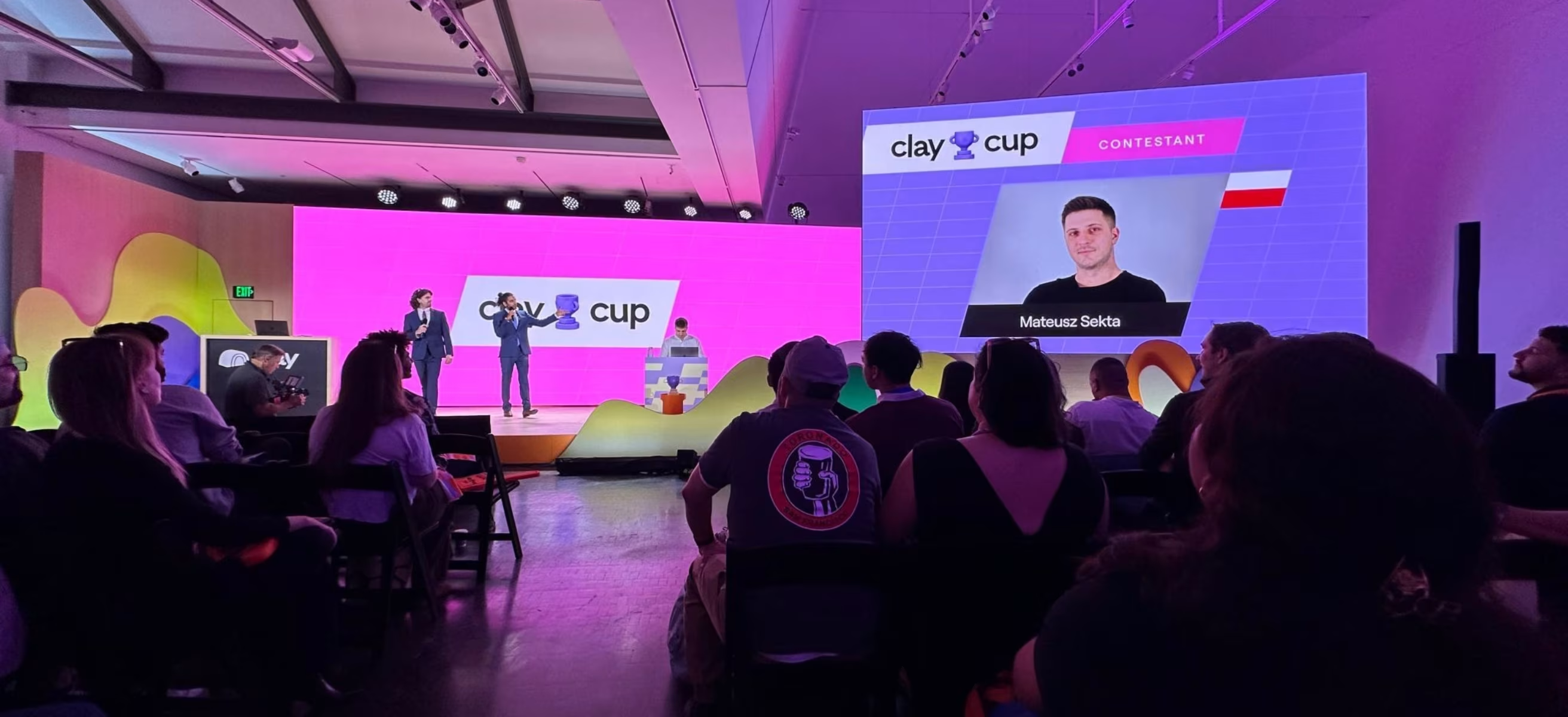
September 17, 2025. San Francisco. A room at SCULPT, Clay's first conference.

A timer, a stage, and no slides
Clay Cup is the first live go-to-market tournament in the world. Thirty-two cities, one representative each, every one of them carrying their local tech community with them.
The format is brutal in its simplicity. Two competitors, one complex business problem, twenty to thirty minutes. Live. On stage. Everything built inside Clay, a platform that pulls data from more than 130 sources and turns it into working sales automation.
No prepared demo. No second attempt. You open an empty table and start building while a timer runs.
The discipline has a name now. GTM engineering, part technical, part analytical, part commercial and strategic underneath all of it, because connecting data means nothing without the business context that tells you which connections are worth making.
You wire a CRM, an outreach tool and a few databases into one system that puts the right offer in front of the right person before the window closes. Five years ago the role barely existed. Today every serious B2B company is hiring for it, and Clay Cup is the only place on earth where you have to do it live, in front of an audience, against somebody just as good.
.avif)
Five rounds and one empty table
It started with local qualifiers. Winning in Poland meant representing the country and the Warsaw Clay Community Club on a global stage.
First global challenge. Build a functional workbook in twenty minutes. End to end workflow, personalized outbound campaign, from scratch. No time to think, only time to build. Top 16 out of 32 of the sharpest GTM minds alive.
Round of 16. One on one against Berlin. Top 8.
Quarterfinal in London. One on one against Amsterdam, live on stage, in front of 150 people and four expert judges. The task was to build a GTM alpha in twenty minutes: a full outbound campaign assembled from raw GTM data, combining every feature we had used across the previous rounds into one working system. Top 4.
The pressure compounded with each stage. Early rounds meant cleaning and analyzing hundreds of messy records against a timer. Later rounds meant defending the logic of a live build in front of judges who knew exactly where it would break.
Standing on that London stage, the room felt loud in a specific way. Somewhere in the noise was the entire Polish Clay community, and none of it felt like doing this alone.
Top 4. Four people out of dozens of countries. Javeria from Pakistan, Kushagra from India, Jake from the UK, and us.
.avif)
What the stream doesn't show
The audience watches twenty minutes of somebody building a table.
Behind those twenty minutes sit six to eight hours of prep with a coach. Before every single stage. Every enrichment in Clay. Every data source. Every possible output, and every way that output breaks when a few hundred people are watching.
Here is the lesson that outlasted the trophy.
Under pressure you don't get creative. You run whatever you've drilled into reflex.
There is no room on stage for "let's think about how to approach this ICP." There is room for one thing. Recognize the pattern, reach for the play you've run before, execute.
Outbound works the same way. Campaigns aren't won by ideas. They're won by a process you can repeat a hundred times and get the same result. Four years of running campaigns for clients turned out to be better preparation than any course.
.avif)
The final
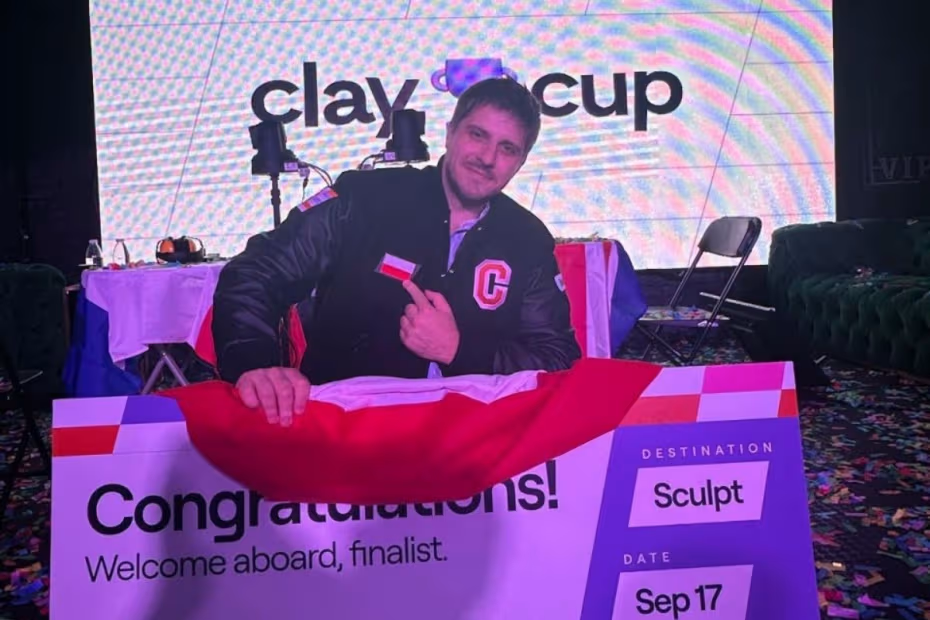
Three months earlier we clicked apply. Now we were in San Francisco, on a stage at Clay's own conference, one round away from the title - the only European team left standing.
Twenty minutes. An empty table. A panel of judges who build these systems for a living and a room that could see every keystroke on the screen behind us.
We built. The clock ran out.
Second in the world. First in Europe.
We earned that stage. Every round before it, we were building against people who do this at the highest level anywhere, and every round we advanced. What we do for clients - quietly, for four years - holds up against the best on the planet.
Nobody in that room cared that we came from Poland. Geography stopped mattering in this field. What matters is what you can build in twenty minutes while the clock runs.
What we actually won
The trophy was never the point, though it took us a while to notice.
Eight months after the final:
- LinkedIn went from 2,000 to 10,500 followers. Before the Cup we posted nothing.
- 572,000 impressions and over 20,000 interactions, starting from zero.
- Average contract value doubled, driven by new services built around Clay.
Read that as a mechanism, not a highlight reel.
Visibility creates recognition. Recognition gets you on stages. Stages buy you trust on a sales call before you open your mouth. Trust shortens the cycle and lifts the ticket. A snowball. You push it, then you steer it.
The most durable thing we walked away with is a USP nobody can copy. Anyone can clone an offer, a price list, a website. Nobody can clone second place in the world.
Three things that stuck
- Competence under pressure is the only competence that counts. Anything you haven't turned into reflex disappears the moment someone starts a timer. True on a stage in San Francisco. True for a campaign that has to produce pipeline in week two.
- Social proof is a lever, not a trophy. The result changes nothing on its own. What you do with it over the next eight months changes everything.
- The biggest moves start with "why not." Half the good things I've built started with me thinking "eh, why not" and clicking something.