.webp)
Three years ago I would have volunteered at Infoshare just to get inside.
Not for the stage. Not for a badge that said speaker. Just to be in the building, close to the people whose talks I was watching from the back rows, doing the unglamorous work that lets a conference like this run. That was the ceiling of what felt realistic at the time.
On 20 May 2026, I walked onto the Marketing & Sales stage at Infoshare in Gdańsk, the largest technology and business conference in Central and Eastern Europe, more than 6,500 people through the doors. Twenty minutes, one idea, a room I would once have queued to enter as free volunteer. The audience rated the talk 4.5 out of 5.
I am not writing this to take a victory lap. I am writing it because the distance between those two moments is exactly the thing I got on stage to talk about. The job I now do did not exist in a form I could have named three years ago. That is not a personal story. It is where the whole market is heading.

What "a modern sales team" used to mean?
Two years ago, a modern sales team meant six SDRs, three AEs, and a manager. You scaled pipeline by adding bodies. More reps, more activity, more meetings booked. The org chart was the strategy.
That structure is already breaking, and the reason is not fashion. It is volume.
There is so much data moving through B2B now, intent signals, funding rounds, hiring moves, tech-stack changes, product usage, that no single person can credibly run research, prioritization and outreach at the quality buyers expect in 2026. Ask one rep to do all three and every part suffers. The research is shallow, the prioritization is a guess, and the outreach lands in a saturated inbox that has seen the same template forty times this quarter.
The old team wasn't wrong for its era. It is simply being asked to operate in a market that produces more signal in a week than it used to in a year.

The sales org is splitting into two layers
The modern sales team is being rebuilt around two distinct layers, and the split is the whole point.
The first is the orchestration layer. GTM engineers, RevOps, sales-ops hybrids. Their job is to turn raw market data into prioritized lists, accurate signals and clean context, so that the person having the conversation never walks in cold and never wastes a meeting on an account that was never going to move.
The second is the closing layer. Humans having real conversations. They don't research. They don't build lists. They walk into a calendar already full of meetings that make sense, and they convert.
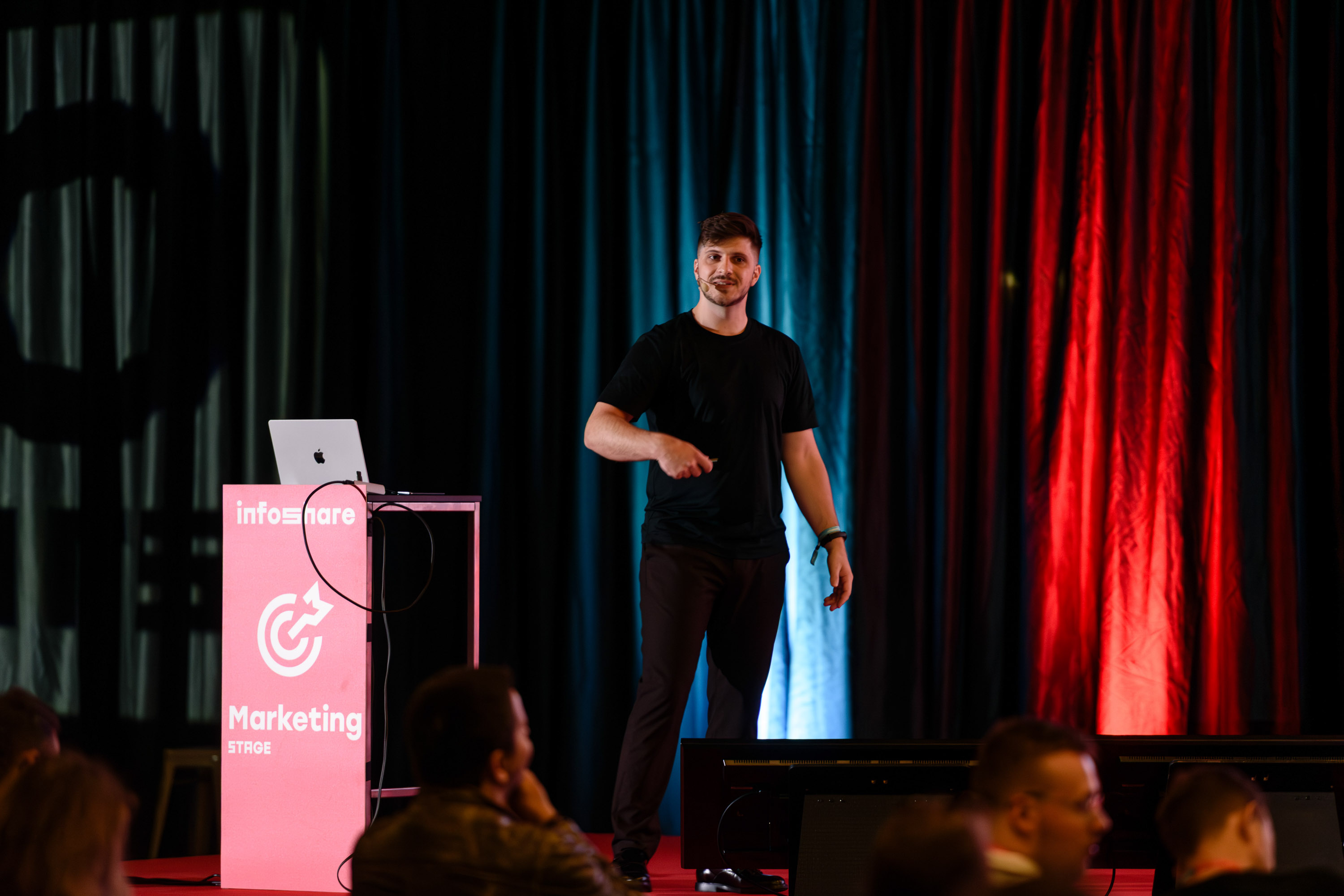
This is not a prediction. It is already how the best B2B teams operate. The result is more leverage per closer, less dead activity, and more revenue per head. You stop scaling the org chart and start scaling the system underneath it.
The practical question I put to the room was not "should you build this." It was "which layer do you build first, given where you are right now." A company still validating product-market fit needs a different answer than a company sitting on 30,000 CRM records it never activates. Most GTM problems are stage-fit problems wearing a tooling costume.
What I actually built the talk around
I kept the talk deliberately close to the ground. No abstract futurism, just the shift teams can feel in their own numbers.
The core rule underneath all of it: at any given moment only a small slice of your market is ready to buy. The rest are not, which means the job is to stay on their radar until readiness appears, and to recognize the moment it does. The orchestration layer exists to catch that moment. The closing layer exists to use it. Build one without the other and you either drown in signal you can't act on, or you act fast on nothing.

The part that matters more than the stage
The role I do now, GTM engineering, has no degree, no certificate, no exam. Nearly everyone in it is self-taught, and most of us came from some kind of pain: a clogged CRM, a cold channel that stopped converting, a founder asking for more pipeline without more headcount. You pick a real revenue problem and you build your way out of it, one broken pipeline at a time. Do that enough and one day the thing you'd have volunteered to watch is the thing you're asked to explain.
That's the honest throughline. Not talent, not luck, not a single big break. Just three years of treating outbound as a system to be engineered rather than a headcount to be hired, and being willing to look stupid while learning it in public.
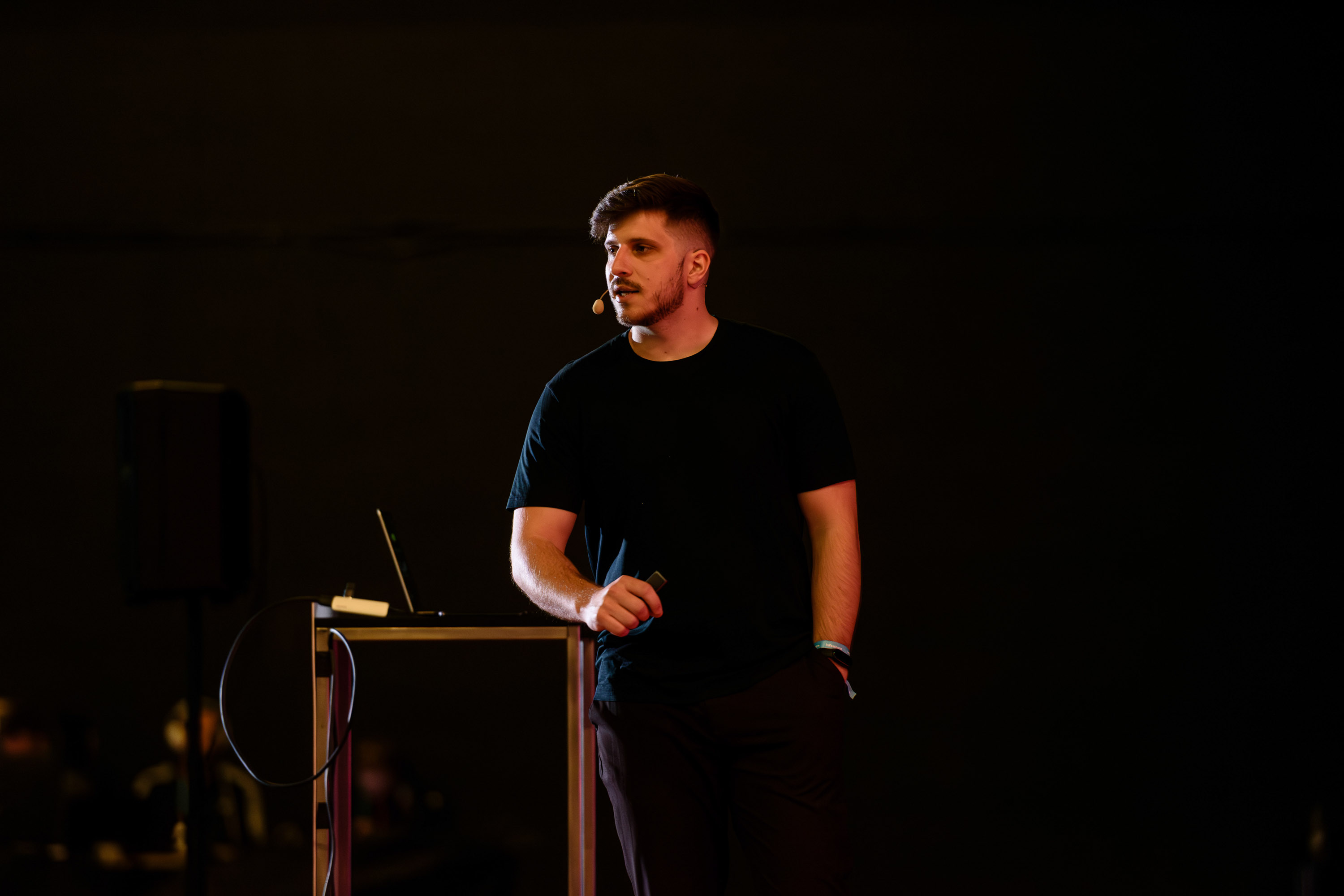
Infoshare was the moment it went from a thing we do to a thing worth standing on a main stage to explain.
Three years ago I would have volunteered just to get inside. This year I got to talk. Next year I'd like to have something even better to say.